
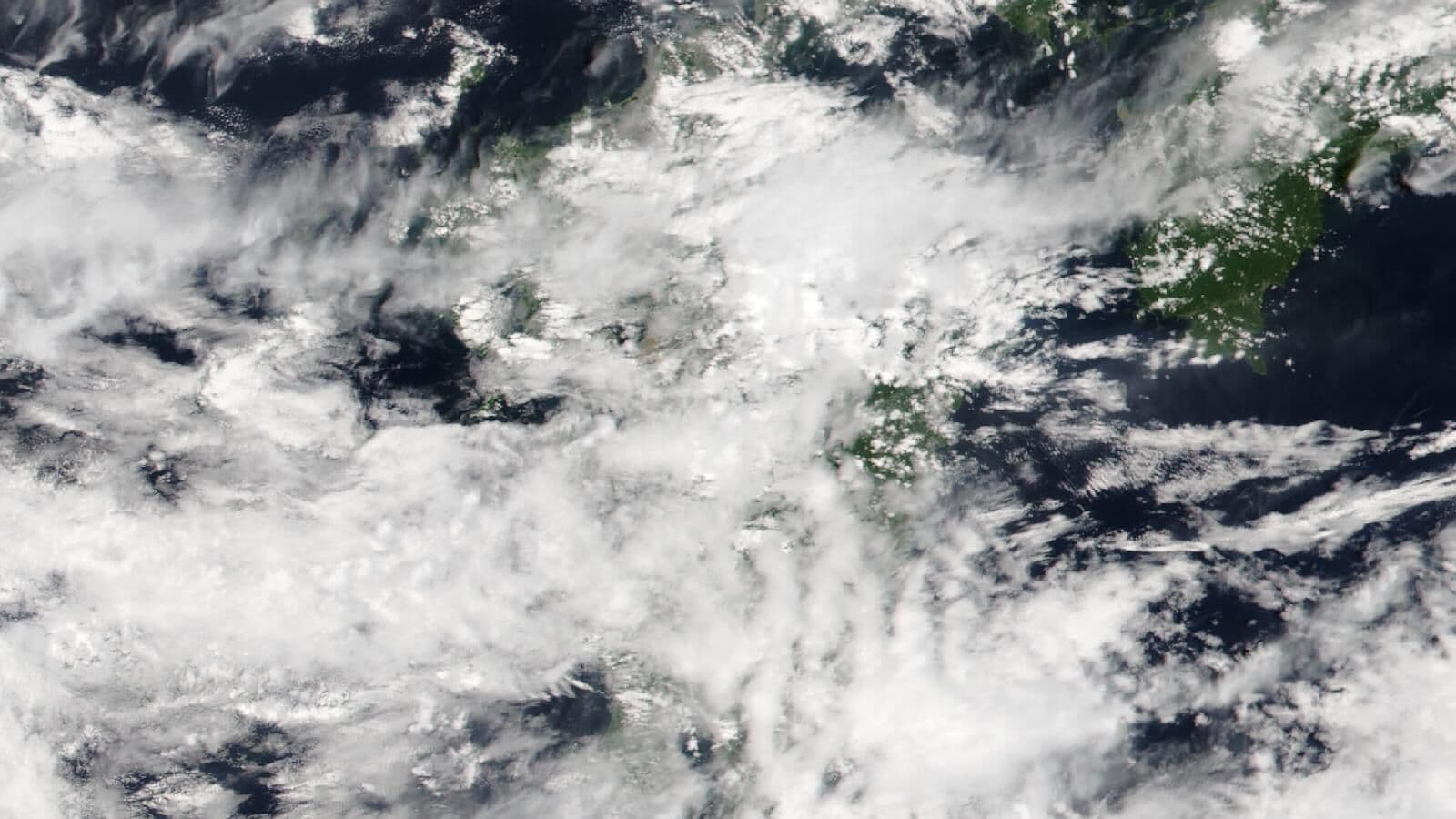
 Photo: NASA Worldview / VIIRS on NOAA-21, Public Domain
Kyushu Floods
Overview
On July 1, 2026, a stationary seasonal front unleashed disaster-level rainfall across Japan's Kyushu region, with linear rainbands — narrow zones of successive rainclouds that repeatedly train over the same area — forming across Fukuoka, Saga, Nagasaki, Oita, and Kumamoto prefectures. Hourly rainfall reached 84.5 millimeters in Saikai, Nagasaki, and 73.5 millimeters in Minamioguni, Kumamoto, with the Japan Meteorological Agency warning of the highest-level 'disaster risk' as rivers overflowed and hillsides gave way. In Kumamoto Prefecture, the Tsuetate River overflowed shortly after 4 a.m. on July 2, sweeping debris through riverside communities. At least three people were confirmed killed after being caught in landslides and flash flooding in Kagoshima, Kumamoto, and Fukuoka prefectures, with additional residents missing or unaccounted for.
JMA issued evacuation advisories to more than 360,000 people in Kagoshima and Miyazaki prefectures, with tens of thousands more ordered to evacuate in Kumamoto and five other prefectures. Landslides and submerged roads cut off access to smaller towns and villages, damaging bridges and blocking main routes. Power outages spread through several communities as lines were downed and substations flooded, while water treatment facilities damaged by debris left some areas with temporary shortages of fresh water. Farmers across southern Kyushu reported destroyed crops and washed-out farmland, raising fears of longer-term economic damage in a region still recovering from previous rainy-season disasters.
Prime Minister Shigeru Ishiba ordered nationwide search-and-rescue operations and directed the Self-Defense Forces, National Police Agency, and Fire and Disaster Management Agency to coordinate relief. The Japanese Red Cross Society mobilized disaster relief teams and opened evacuation centers across the affected prefectures, distributing emergency supplies and providing first aid. International humanitarian organizations, including the IFRC, indicated readiness to provide additional support as the full scope of the disaster became clear amid ongoing rainfall forecasts and continued landslide risk.


At a Glance
- Status
- Recovery
- Severity
- Major
- Type
- Flood
- Affected
- 360,000+
- Responders
- 4 orgs
- Started
- July 1, 2026
Share
Help spread awareness about this disaster and the organizations responding.