
 Photo: CSU/CIRA & NOAA, Public Domain
Central Texas Flash Floods
Overview
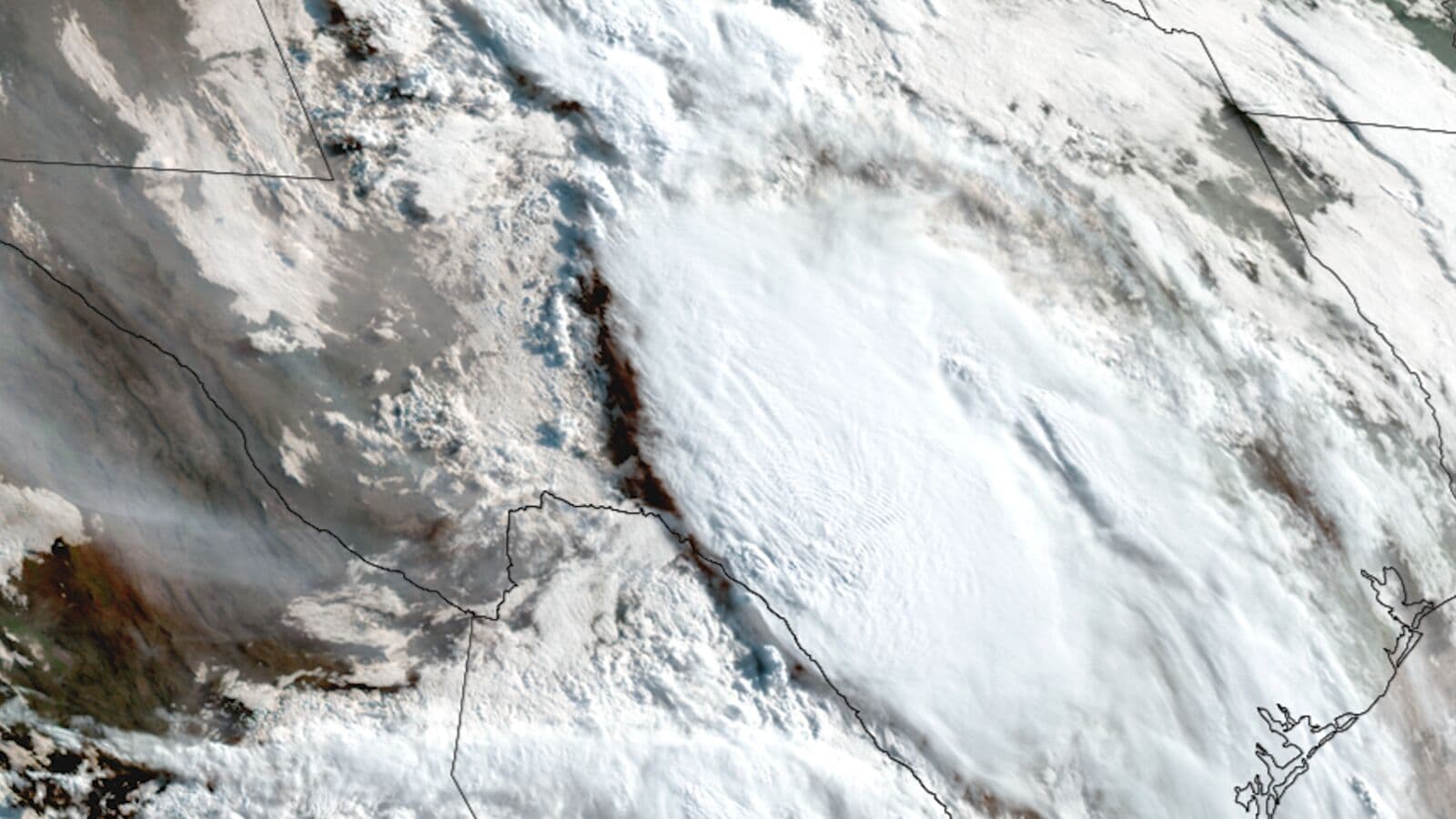
Beginning July 13, 2026, a stalled upper-level low interacted with deep tropical moisture over South-Central Texas and unloaded 6 to 16 inches of rain on already-saturated ground west of San Antonio. The National Weather Service's Weather Prediction Center issued a rare Level 4-of-4 High Risk of excessive rainfall — the highest category, historically issued only a handful of times per year — for a broad swath stretching from the Hill Country through Bexar County toward the middle Texas coast, with the potential for another foot of rain through Thursday.
By the morning of July 14, high-water rescues were underway across Uvalde County, where 24-hour rainfall totals of 16 inches produced flash flooding along creeks that had already flooded earlier in the summer. Road closures multiplied across Uvalde, Real, Medina, Kinney, Bexar and Travis counties, and shelter operations opened in San Antonio and along the I-10 corridor. Governor Greg Abbott issued a state disaster declaration for 59 Texas counties — spanning the Gulf Coast, South Texas Plains, Hill Country and Central Texas — and directed the Texas Division of Emergency Management to elevate the State Emergency Operations Center to Level II (Escalated Response). Texas A&M Task Force 1 swiftwater teams, Texas Military Department high-water vehicles, DPS troopers and TPWD game wardens were pre-positioned across the threat area.
The event arrived one year and 10 days after the July 2025 Guadalupe River disaster in Kerr County that killed more than 130 people at riverfront camps, and officials repeatedly urged residents to heed evacuation orders, avoid low-water crossings and move to higher ground overnight as additional rounds of storms trained over the same watersheds. The American Red Cross, The Salvation Army, Team Rubicon and Global Empowerment Mission all activated Texas response teams, and Feeding America's regional food bank network began pre-positioning emergency food and water for distribution across the impacted counties.
Responding Organizations
6 organizations


At a Glance
- Status
- Recovery
- Severity
- Major
- Type
- Flood
- Affected
- 100,000+
- Responders
- 6 orgs
- Started
- July 13, 2026
Share
Help spread awareness about this disaster and the organizations responding.