
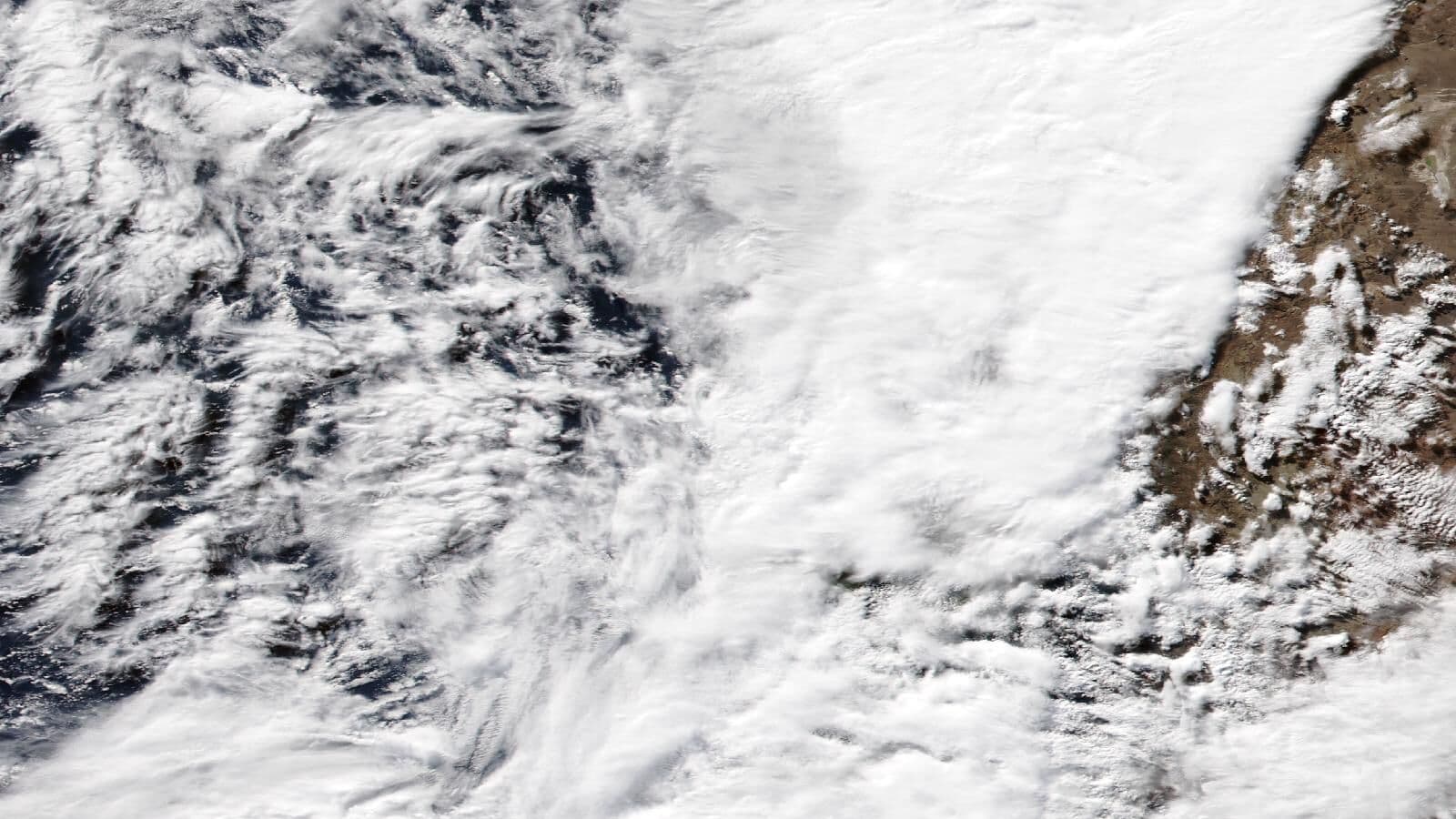
 Photo: NASA Worldview / VIIRS on NOAA-21, Public Domain
Chile Storms & Floods
Overview
Beginning July 16, 2026, an intense frontal system swept across central and southern Chile, unleashing torrential rain, damaging winds, and flooding that stretched from the semi-arid Coquimbo region in the north to Los Lagos in the south. Chile's national disaster prevention and response service (SENAPRED) confirmed at least three storm-related fatalities: a roadworks laborer killed while clearing debris in the southern town of Negrete, a resident who fell while attempting to clear a roof in Temuco, and a person who died from a fatal electric shock in the capital, Santiago. Seven others were reported injured.
By July 17, SENAPRED said 466 people remained sheltered in emergency accommodation, some evacuated as a preventative measure, while 158 residents — most in the Coquimbo region — were isolated by rising rivers and impassable roads. Approximately 257,000 households and businesses were without electricity, the majority in the southern regions of Biobío, La Araucanía, and Los Ríos, where crews raced to reconnect service between bands of heavy rain. Classes were suspended in several districts, and state-owned mining giant Codelco temporarily halted surface operations at the Andina mine as the storm intensified. President José Antonio Kast traveled to the Biobío region to survey damage and coordinate with regional authorities, warning that the heaviest rainfall was still expected in the days ahead.
The Chilean Red Cross deployed volunteers to shelter operations and welfare checks across the impacted regions, coordinating with the International Federation of Red Cross and Red Crescent Societies (IFRC) on regional support. Save the Children, CARE, and Direct Relief activated Latin America response teams to assess needs for displaced families, medical supply shortages in cutoff communities, and child protection in shelters.


At a Glance
- Status
- Recovery
- Severity
- Major
- Type
- Flood
- Affected
- 260,000+
- Responders
- 4 orgs
- Started
- July 16, 2026
Share
Help spread awareness about this disaster and the organizations responding.