
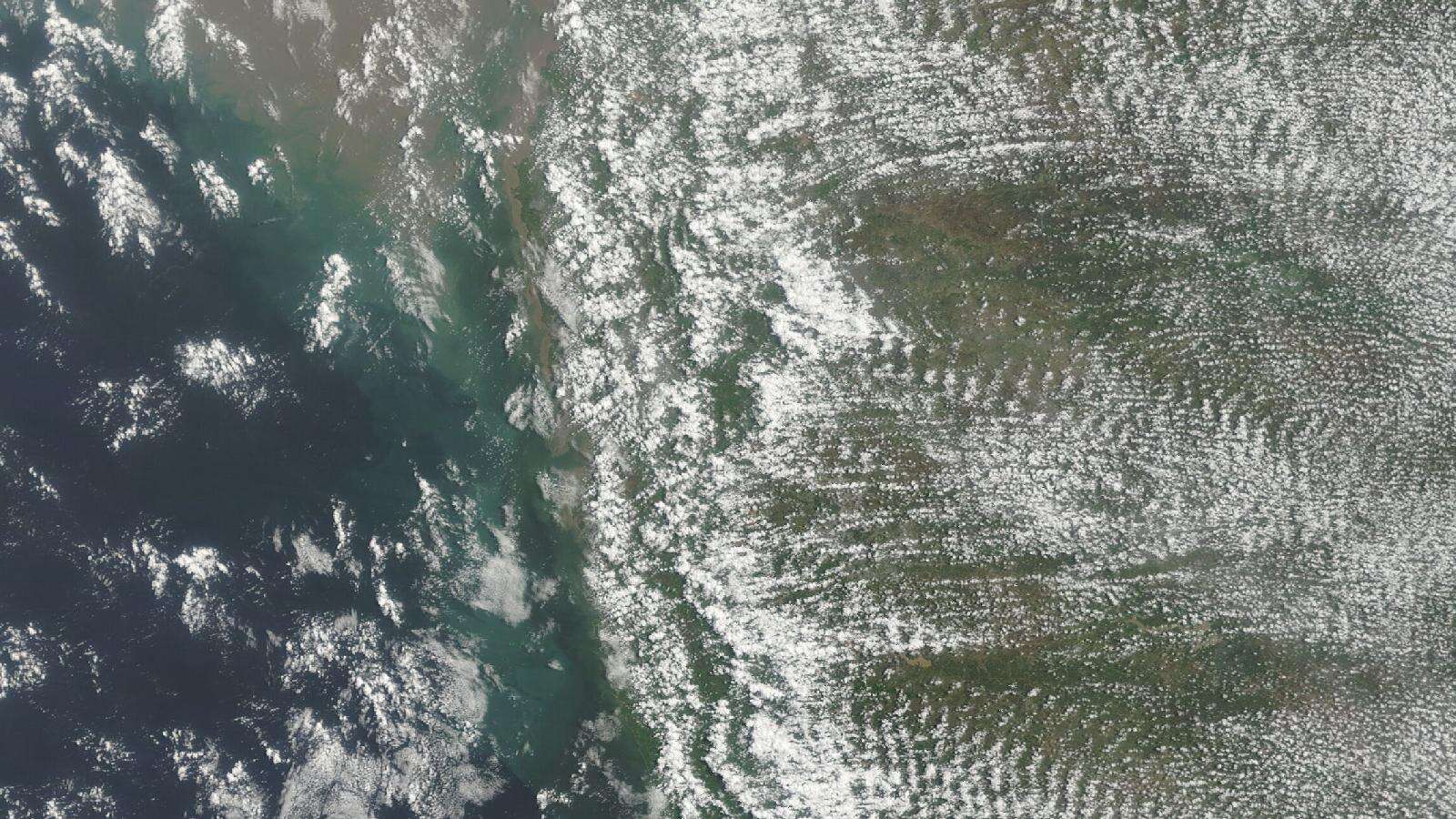
 Photo: NASA Worldview / MODIS on Terra, Public Domain
Maharashtra Floods
Overview
A punishing pulse of monsoon rainfall struck western India in the first week of July 2026, overwhelming Maharashtra's coastal plains and Sahyadri hill towns. Lonavala recorded a staggering 625 mm (24.7 inches) in 48 hours, and rivers including the Ulhas, Kalu, Pinjal, Amba, Savitri, Kundalika, Patalganga and Jagbudi breached their danger marks. The India Meteorological Department issued red alerts for Mumbai, Thane, Raigad and the hill stations of Matheran, Lonavala, Khopoli and Lohagad as landslide risk soared. Chief Minister Devendra Fadnavis described the rainfall as a "force majeure" event and said the state's disaster machinery was fully mobilised; Union Home Minister Amit Shah spoke with him to review relief operations.
The State Emergency Operations Centre put weather-related fatalities across Maharashtra at 62 since June 1, with an additional 200 livestock deaths and nearly 100 houses damaged. Of the human toll, 25 deaths and 41 injuries have come from structural collapses in Nashik, Thane and Mumbai Suburban; 23 deaths and 17 injuries from thunder and lightning; and six deaths and four injuries from landslides and mudflows in Sindhudurg, Ratnagiri, Raigad, Satara and Pune. In the first week of July alone, at least 18 people were killed and 10 injured as buses were stranded in floodwaters, walls and billboards collapsed, and low-lying neighbourhoods across Mumbai, Nashik and Pune were inundated. Palghar has recorded 457% of its normal rainfall for the season and Pune 435% — putting almost every district in the state's "Large Excess" category.
The state has deployed 17 pre-positioned National Disaster Response Force (NDRF) teams and kept six State Disaster Response Force (SDRF) teams on standby, with the Indian Navy also on alert for coastal rescues. NDRF crews have rescued more than 3,400 people from inundated neighbourhoods and shifted nearly 3,900 residents to relief centres, while local authorities have opened emergency shelters, community kitchens and medical camps across the worst-hit districts. The Indian Red Cross Society's Maharashtra branch is distributing food, safe water, clothing and hygiene supplies through its network of volunteers, and international humanitarian responders including CARE and Save the Children are supporting relief camps, child protection and psychosocial services as forecasters warn of more heavy rain through mid-July.
Responding Organizations
3 organizations


At a Glance
- Status
- Recovery
- Severity
- Major
- Type
- Flood
- Affected
- 100,000+
- Responders
- 3 orgs
- Started
- July 6, 2026
Share
Help spread awareness about this disaster and the organizations responding.