
 Photo: Nskjnv, CC BY 4.0
Assam Floods
Overview
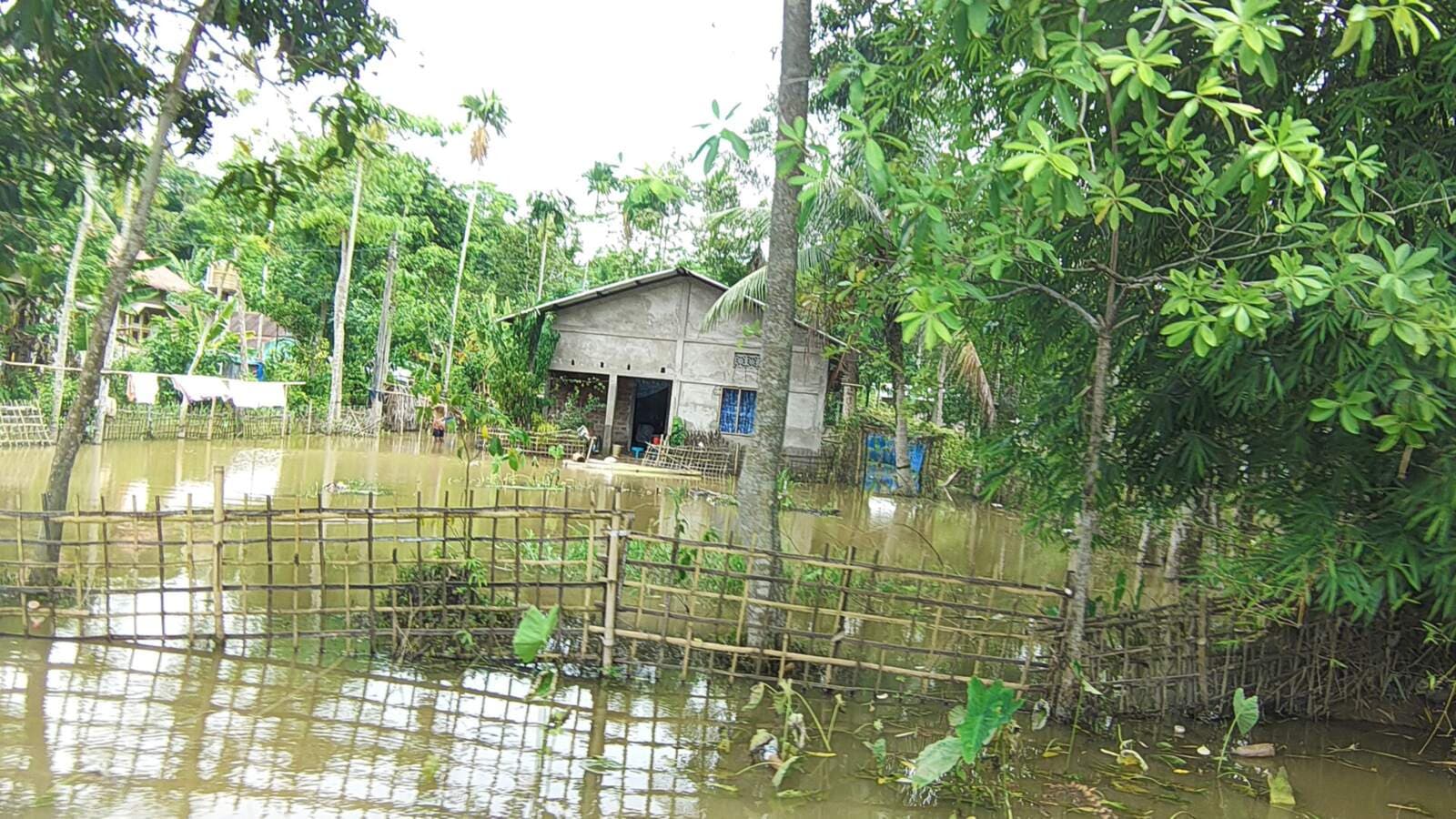
Beginning in late June 2026, torrential monsoon rainfall triggered widespread flooding across the northeastern Indian state of Assam, with the districts of Dhemaji, Dibrugarh, Lakhimpur, Chirang and Nalbari bearing the brunt. In the first days of the flooding, the Assam State Disaster Management Authority (ASDMA) counted more than 45,500 people directly affected — Dhemaji alone accounted for over 41,000 of them, followed by Dibrugarh with nearly 4,000 residents displaced. At least 96 villages were submerged, and one person was swept away by fast-moving floodwaters in the Jonai subdivision of Dhemaji. Neighbouring Arunachal Pradesh recorded three additional deaths from flash floods and landslides, and the Indian Air Force was called in to rescue stranded residents along cut-off mountain roads.
The flooding grew far worse over the following weeks as the Brahmaputra and other rivers overflowed after days of heavy rain. As of August 10, officials put the death toll at 100, and more than 700,000 people had been displaced. Nearly 300,000 people were forced into government-run relief camps, and at least 49,000 were still housed in 125 relief camps and distribution centres. Sivasagar was the worst-hit district, and some 50,000 affected people had received interim compensation, according to Assam minister Pijush Hazarika.
Infrastructure damage has been severe. Strong currents from the overflowing Simen river destroyed the piers of a railway bridge between Archipathar and Simen Chapari stations, forcing an indefinite suspension of train services on the strategic route into upper Assam. Buses have been arranged between Murkongselek and Silapathar as a stopgap, and help desks have opened at Dhemaji, Silapathar and Murkongselek stations to assist stranded passengers and displaced families. Kaziranga National Park has recorded the deaths of more than 130 wild animals from the rising water — including at least six critically endangered one-horned rhinos — as the floodwaters submerged large stretches of the park's grasslands.
Union Home Minister Amit Shah spoke with Assam Chief Minister Himanta Biswa Sarma to assure the state of the Centre's full support. National Disaster Response Force (NDRF) and State Disaster Response Force (SDRF) teams, together with fire services and district administrations, are deployed across the worst-hit districts. The Indian Red Cross Society's Assam State Branch — a frontline responder in the state's annual flood emergencies for decades — is distributing food, clean water, clothing and essential supplies with a particular focus on children and vulnerable groups. International humanitarian organisations including CARE and Save the Children are supporting relief camps, hygiene provision and child protection services, while local NGOs Oxfam India, Goonj and Rapid Response are running parallel operations across the flood belt.
Responding Organizations
3 organizations


At a Glance
- Status
- Recovery
- Severity
- Major
- Type
- Flood
- Affected
- 700,000+
- Responders
- 3 orgs
- Started
- June 27, 2026
Share
Help spread awareness about this disaster and the organizations responding.