
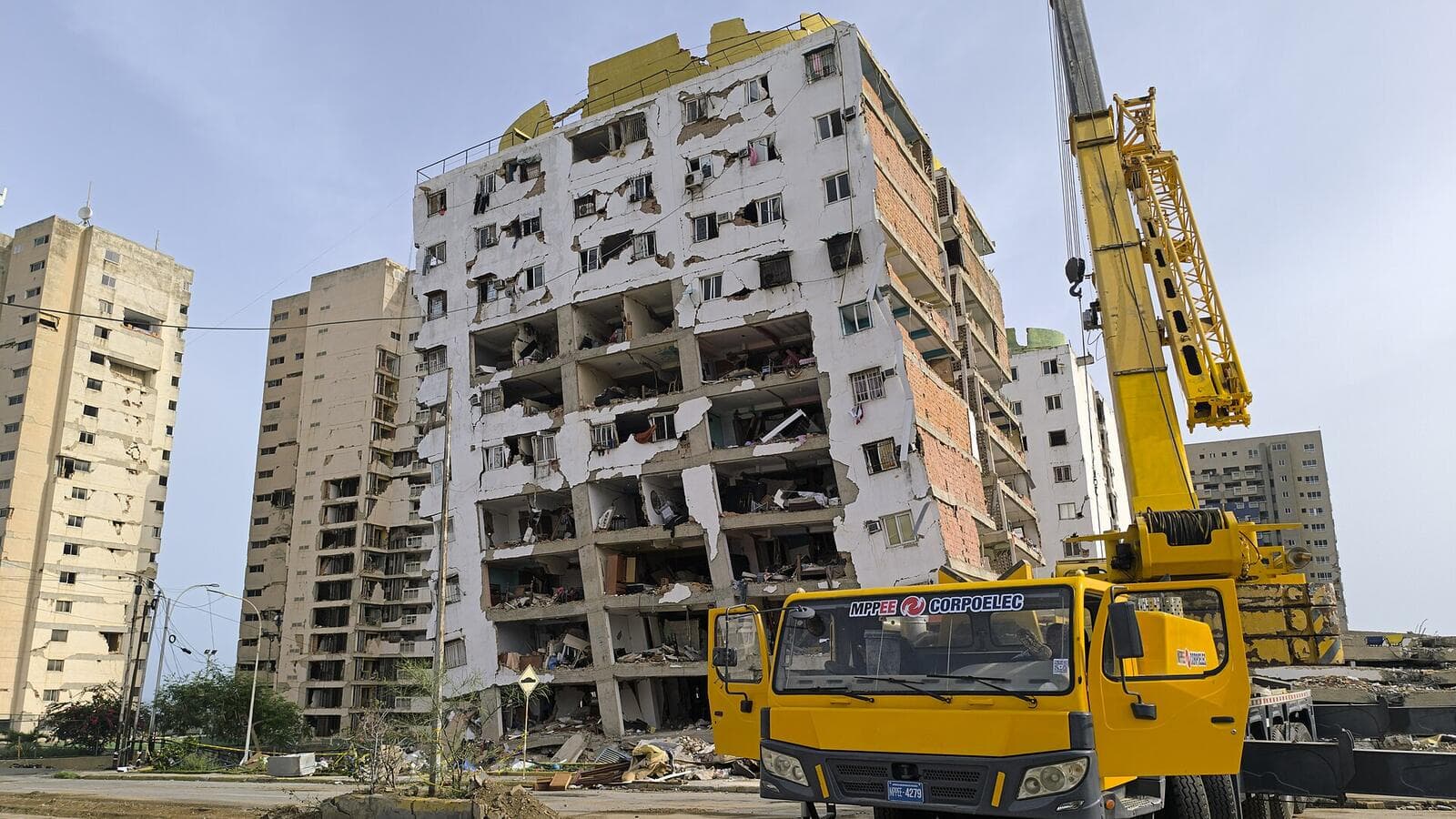
 Photo: RatUnderground, CC BY-SA 4.0
Venezuela Earthquakes
Overview
At 6:04 p.m. local time on June 24, 2026, a magnitude 7.2 earthquake struck northern Venezuela, followed just 39 seconds later by a magnitude 7.5 mainshock, the strongest tremor to hit the country in more than 125 years. The epicenter was near San Felipe in Yaracuy state, along the San Sebastián fault, but violent shaking radiated across Caracas, the coastal state of La Guaira, and the states of Carabobo, Aragua, Miranda, and Trujillo. Simón Bolívar International Airport, the capital's main gateway, was severely damaged.
The death toll climbed for weeks as rescuers reached collapsed buildings and outlying communities. Venezuela's government confirmed 6,509 deaths as of August 24, 2026, its most recent official figure; the governor of La Guaira separately reported 7,265 dead and 1,579 missing in that state alone. Citizen registries have logged tens of thousands of missing-person reports, many of them duplicates, and no official national count of the missing has been published. La Guaira, declared a national disaster zone, was the hardest-hit state, with more than 1,400 buildings collapsed. Only about 30% of its collapsed buildings had been searched by late August, and bodies were still being recovered at the end of September.
Venezuela's government declared a state of emergency, shut off gas supplies, suspended the Caracas Metro, closed schools, and deployed more than 14,000 military personnel to the worst-hit areas, joined by over 1,600 rescuers from abroad. The International Federation of Red Cross and Red Crescent Societies activated its emergency network nationwide, with the American Red Cross and the Venezuelan Red Cross coordinating search-and-rescue, medical care, and relief-supply operations, while the Global Empowerment Mission mobilized aid and logistics for displaced families on the ground. The United States pledged $150 million and deployed urban search-and-rescue teams, and France, Mexico, Colombia, Chile, Spain, and the Dominican Republic dispatched rescue specialists, search dogs, and aircraft. UNDP put housing and economic losses at $4.7–8.7 billion, and other estimates run far higher.
By the 100-day mark on October 2, the emergency had become a long recovery. Around 18,000 people lost their homes, and in late August more than 8,600 people were still living in 26 shelters in La Guaira and about 5,000 in shelters in Caracas. Of more than 60,000 homes inspected, 11,001 were rated high-risk, while only 335 replacement homes had been delivered. In September, Amnesty International criticized the government's response as late and poorly coordinated and called for a reconstruction plan.
Responding Organizations
2 organizations

At a Glance
- Status
- Recovery
- Severity
- Critical
- Type
- Earthquake
- Affected
- 500,000+
- Responders
- 2 orgs
- Started
- June 24, 2026
Share
Help spread awareness about this disaster and the organizations responding.