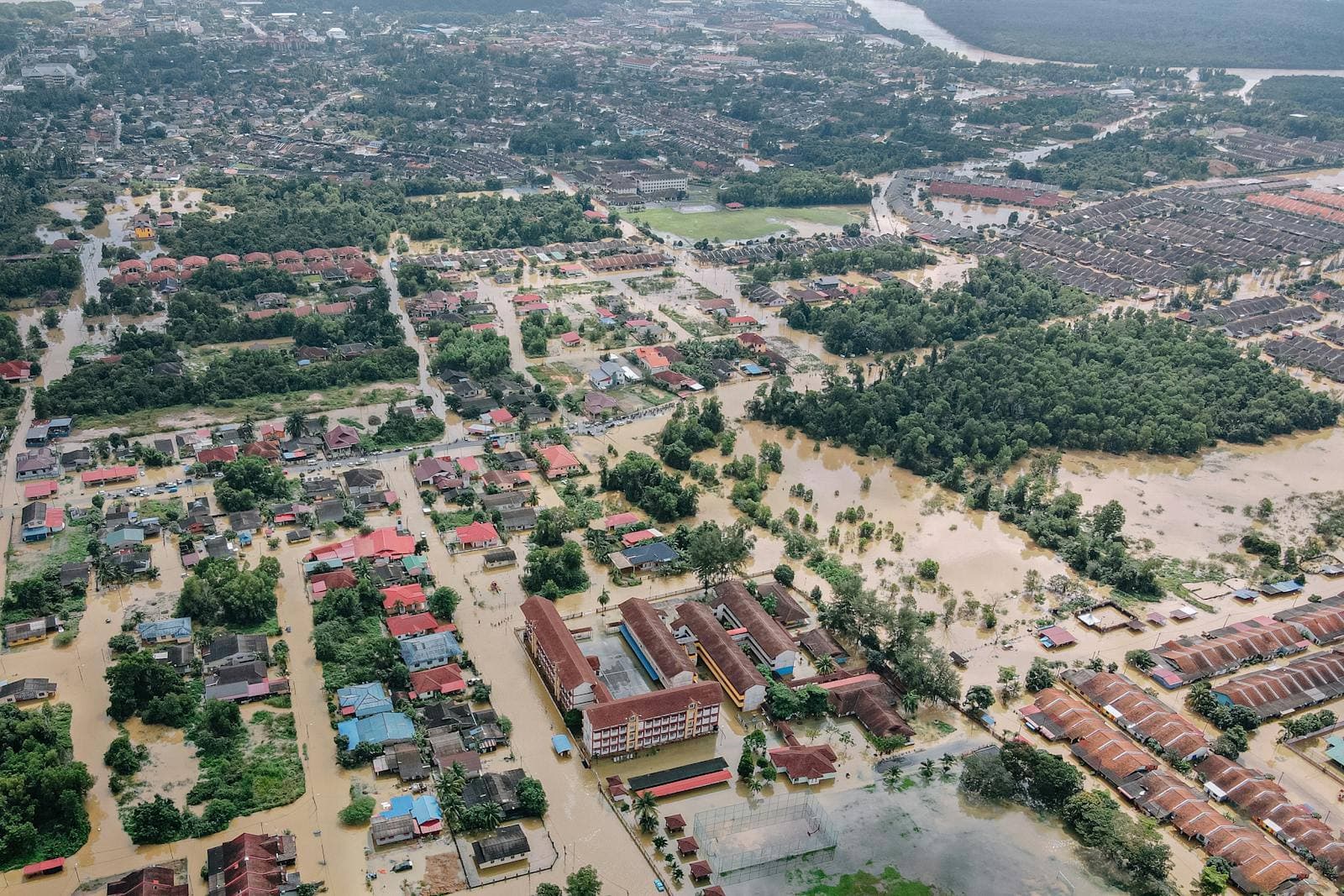
Torrential monsoon rains have plunged the northeastern Indian state of Assam into one of its most severe flood emergencies of 2026, with 96 villages submerged, more than 45,000 residents displaced across five districts, and rescue teams racing to reach communities cut off by collapsing infrastructure. See the full Assam Floods situation report.
A Region Under Water
Dhemaji is the worst-hit district, with over 41,000 people affected as the Simen and Jiadhal rivers spill over their banks. Dibrugarh has counted nearly 4,000 displaced residents, and Chirang, Lakhimpur and Nalbari have all reported flood damage. In neighbouring Arunachal Pradesh — where landslides and flash floods have killed at least three people — the Indian Air Force has been called in to airlift stranded villagers from cut-off mountain roads.
The Brahmaputra and its tributaries are running above the danger mark at multiple gauges. In Kaziranga National Park, more than 130 wild animals have drowned, including at least six critically endangered one-horned rhinos — a stark reminder of how deeply Assam's ecology is bound up with its flood cycle.
Infrastructure Cut
Strong currents from the swollen Simen river washed away a large section of the riverbank between Archipathar and Simen Chapari stations, collapsing the piers of a railway bridge and forcing the indefinite suspension of train services on one of upper Assam's most strategic routes. Buses now shuttle passengers between Murkongselek and Silapathar, and help desks have opened at Dhemaji, Silapathar and Murkongselek to guide displaced families.
Union Home Minister Amit Shah spoke with India Chief Minister Himanta Biswa Sarma to assure the state of the Centre's full support. National Disaster Response Force (NDRF) and State Disaster Response Force (SDRF) teams, alongside fire services and district administrations, are deployed across the worst-affected areas.
Humanitarian Response
The Indian Red Cross — the frontline responder to Assam's annual flood emergencies for decades — is distributing food, clean water, clothing and essential supplies through its Assam State Branch, with special attention to children, older residents, and pregnant women in relief camps. Its volunteers have been mobilised across the affected districts to support evacuations and first aid.
CARE is supporting hygiene provision and shelter needs in the relief camps, drawing on the organisation's long presence in the region's recurring flood responses. Save the Children has flagged the disaster as an acute risk to school-age children and is deploying child protection support, safe spaces, and psychosocial care alongside emergency food distribution.
The country's Relief Directory also lists domestic NGOs — Oxfam India, Goonj, HelpAge India and Rapid Response — that are running parallel operations across the flood belt.
A Recurring Crisis
Assam's geography — a broad floodplain squeezed between the Himalayas and the Meghalaya plateau — means the state faces destructive monsoon flooding almost every year. Scientists have repeatedly warned that climate change is intensifying the rainfall bursts driving these events, even as embankments and drainage systems remain overwhelmed. This year's early flooding, still in the opening weeks of the southwest monsoon, points to a difficult season ahead.
To support relief operations in India, visit the Assam Floods disaster page for links to organisations on the ground accepting donations, or browse the wider organization directory.