
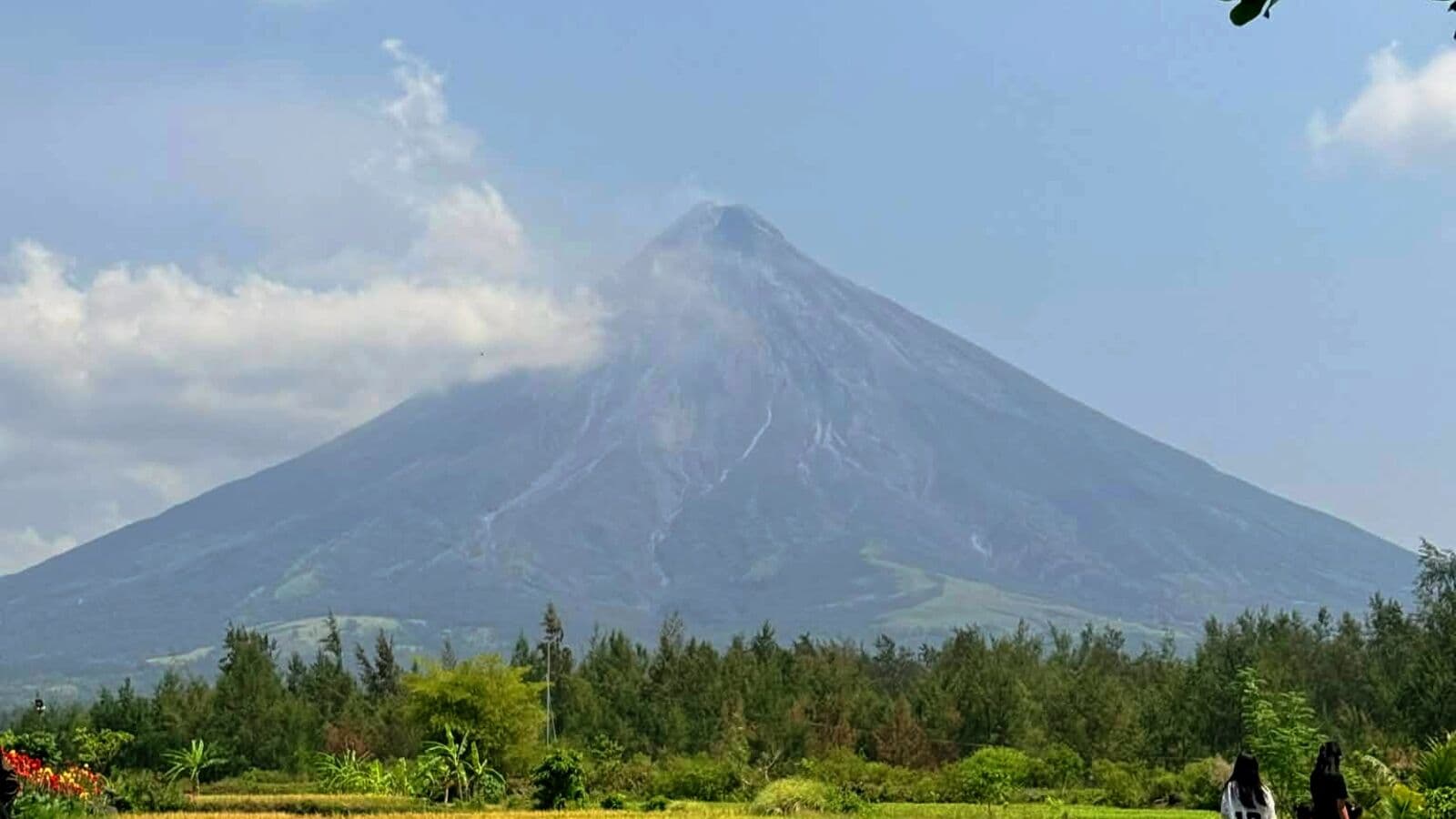
 Photo: Jepoyski, CC BY-SA 4.0
Mayon Volcano Eruption
Overview
On May 2, 2026, Mount Mayon, one of the Philippines' most active volcanoes, generated explosive pyroclastic density currents down its southwestern slopes and produced sustained lava flows extending up to 3.8 km from the crater while at Alert Level 3. The Philippine Institute of Volcanology and Seismology (PHIVOLCS) recorded multiple Strombolian eruptions, rockfalls, and volcanic earthquakes in the days that followed. At least 102,406 people across 87 barangays in Albay Province were affected, with 5,440 individuals sheltering in evacuation centers across Camalig, Guinobatan, Ligao City, Legazpi City, and Daraga. President Marcos ordered a full government response; the Department of Social Welfare and Development distributed over 266,000 family food packs, hygiene kits, and non-food items to displaced residents. The Philippine Red Cross placed response teams on high alert throughout the province, and ashfall contamination of water supplies and elevated respiratory health risks prompted authorities to distribute face masks and water purification supplies across affected municipalities.
Eruptive activity continued into July. Lava flows had stopped advancing by July 22, and the last Strombolian eruptions and pyroclastic density currents of the episode were recorded on July 26 and 28. PHIVOLCS lowered Mayon's alert status from Level 3 to Level 2 on August 5, 2026, and Albay authorities closed evacuation centers so displaced families could return home. Low-level unrest continues, including a spike in sulfur dioxide emissions in mid-August and minor Strombolian eruptions with 500–600 m ash plumes on October 11. The danger zone around the summit remains off-limits, and lahar risk persists along the Mi-isi, Bonga, and Basud gullies during heavy rain.


At a Glance
- Status
- Recovery
- Severity
- Critical
- Type
- Volcanic Eruption
- Affected
- 102,000
- Responders
- 4 orgs
- Started
- May 2, 2026
Share
Help spread awareness about this disaster and the organizations responding.