
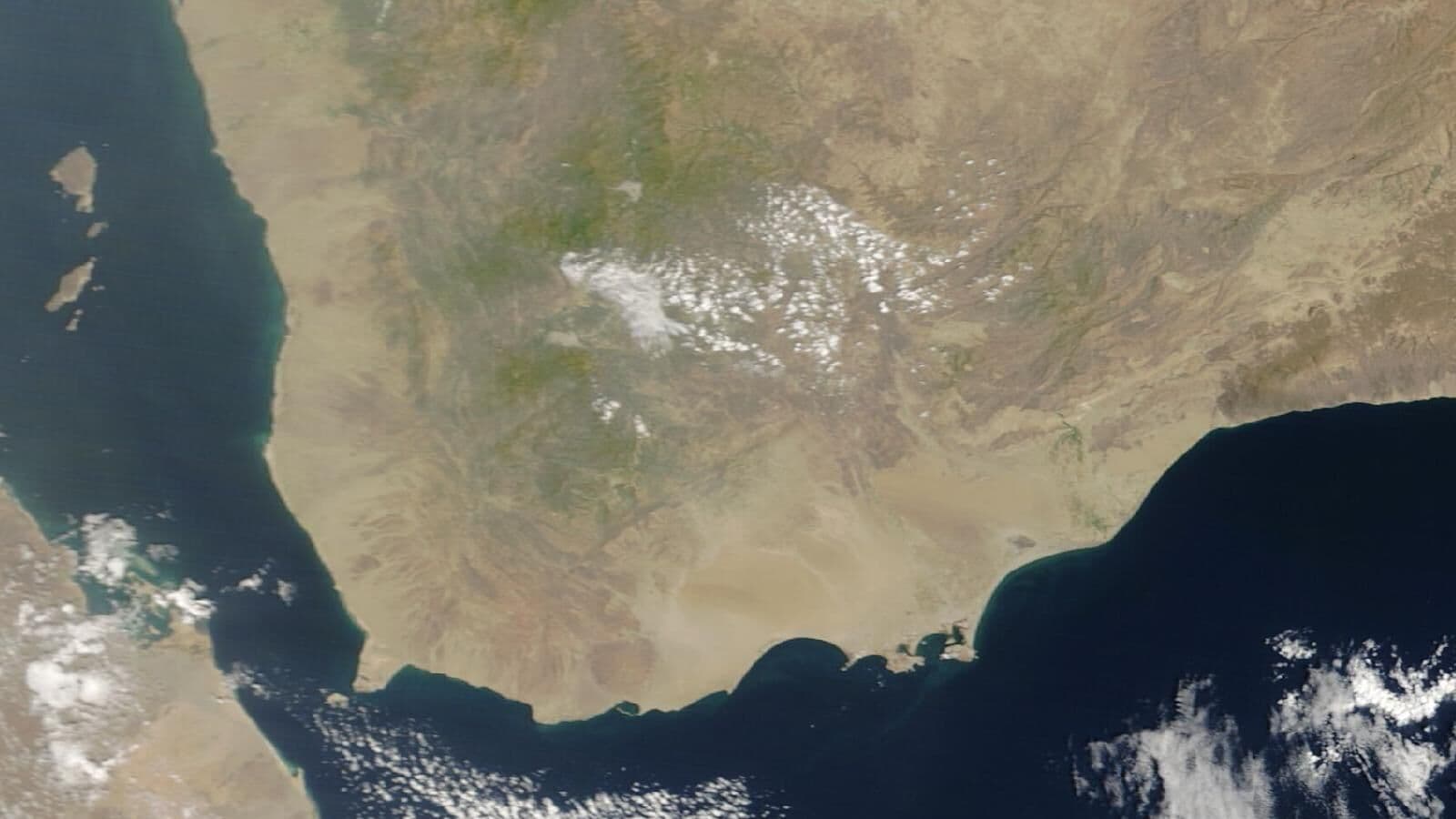
 Photo: NASA Worldview / MODIS on Terra, Public Domain
Yemen Conflict Escalation
Overview
A Houthi offensive in Yemen has ended the relative calm that had held since the 2022 truce. Houthi attacks had been building since early August, and on September 3, 2026 Houthi forces attacked the western Taiz fronts of Maqbanah, Mawzaa and Jabal Habashi, in what Al Jazeera called the fiercest fighting since 2022. In early to mid-September the Houthis took the Red Sea coast, including Mocha, according to Al Jazeera. On September 25 the Presidential Leadership Council called a general mobilization, and after heavy fighting at Jabal Han on October 3–4, government forces launched a counter-offensive. The IFRC reports that casualties and displacement have been concentrated in Taiz, Lahj, Hodeidah, Aden and Abyan, with conflict-related impacts also reported in Marib.
Between August 6 and September 12, Yemen's Ministry of Health and the World Health Organization recorded 2,883 casualties, including 504 deaths and 2,379 injuries, the IFRC reported. The UN human rights office (OHCHR) has confirmed 32 civilian deaths in Taiz, including 14 children. As of October 20, the UN says more than 250,000 people have been displaced; the IOM had counted 201,217 displaced as of October 7. About 1,600 Yemeni refugees have reached Obock in Djibouti.
The Houthis have closed the only supply route between Taiz and Aden, and as of October 20 the UN describes access to Taiz as "essentially blocked". The World Food Programme says flour stocks in Taiz are nearly exhausted, 12 hospitals in Taiz were reported to have about four days of fuel left, and cholera and measles outbreaks are ongoing.
The Yemen Red Crescent Society is responding under IFRC Emergency Appeal MDRYE018, launched on September 11 to raise CHF 15 million and reach 500,000 people. The International Committee of the Red Cross (ICRC) has brought more than 500 tonnes of medical supplies to Sana'a and Aden since the escalation began and, with the Yemen Red Crescent, supports emergency ambulance services in Aden, Taiz, Al-Dhale and Lahj. International Medical Corps supports 19 health facilities on the west coast and runs mobile medical teams, Mercy Corps is providing emergency cash to displaced families in Taiz, and CARE staff are working with displaced families in Aden.


At a Glance
- Status
- Active
- Severity
- Critical
- Type
- War
- Affected
- 250,000+
- Responders
- 4 orgs
- Started
- September 3, 2026
Share
Help spread awareness about this disaster and the organizations responding.